Shooting stars, meteor showers, and glowing comets are some of the most fascinating sights in the sky. But without an astrophysics degree, it can be tricky to tell them apart.
Frankly, just knowing which is which is not enough. You might be wondering which, if any, poses a threat to life on Earth!
Not to worry, you’re about to find out. Get ready for a crash course on space as you learn everything about asteroids, comets, and meteors.
What are space rocks, and why do they matter?
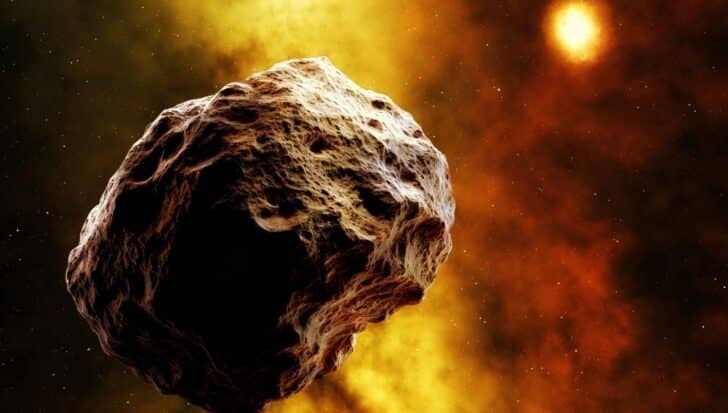
Simply put, space rocks are solid objects that float through space. However, while they are usually composed of actual rocks, made of minerals, they can also contain other materials, such as metals or ice.
Examples of space rocks include asteroids, meteoroids, and comets. But why is it so essential to study space rocks?
Well, because sometimes these space rocks land on our planet. And when they do, scientists can look at them to learn more about our planet’s relationship with space.
Even just observing space rocks in orbit allows us to learn about our solar system and the great Milky Way galaxy.
How are asteroids, meteors, and comets different from each other?
Asteroids are leftover rocks from the formation of planets in our Solar System. They could be as large as a town or about the size of a car. However, they’re always much smaller than a planet, as they lack sufficient gravity to pull or retain an atmosphere.
Most asteroids are found orbiting between Mars and Jupiter, in the appropriately named Asteroid Belt.
As millions of them are clustered there, they sometimes collide with one another, breaking apart into smaller pieces or simply knocking each other off course.
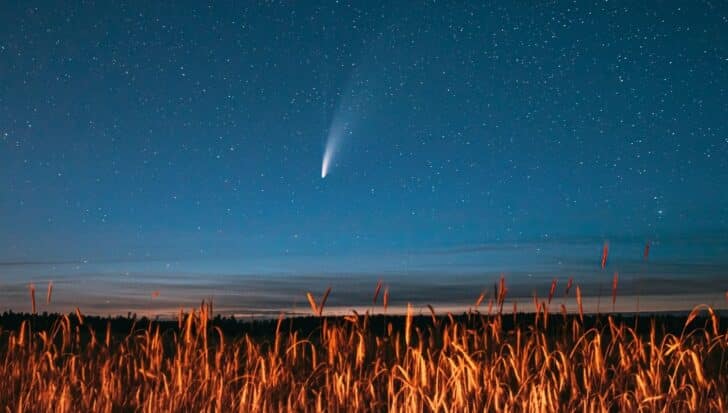
Comets, just like asteroids, are also leftovers from planet formation. They are often referred to as dirty snowballs because they are made of ice, dust, and rock.
Comets orbit the Sun just like planets, but take hundreds of thousands of years to complete one trip. As comets approach the Sun, these balls of ice sizzle, emitting a tail of gas and dust that can be spectacular to witness.
While scientists believe that there may be billions of comets, they’ve only successfully identified about 4,000.
When asteroids, comets, moons, and planets collide in space, (relatively) tiny particles break off them, called meteoroids.
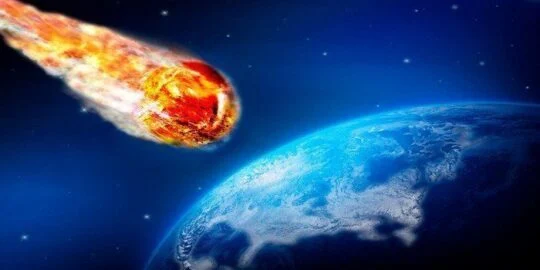
When a meteoroid passes through Earth’s atmosphere and begins to burn up, we call the actual light it sheds a meteor, or a shooting star. Anything larger, and it’s called a fireball or a bolide.
What happens if one of these space rocks strikes Earth?
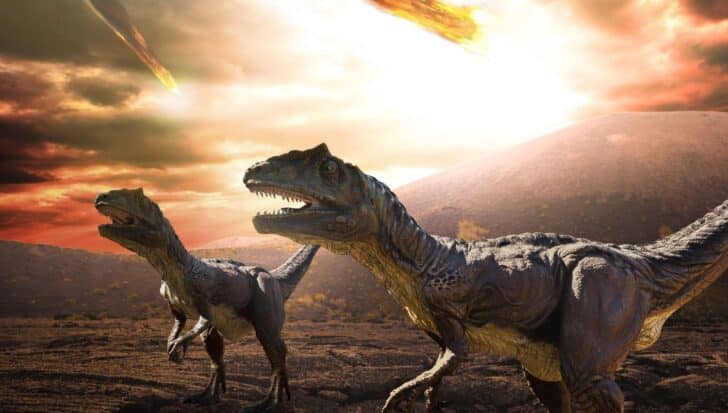
An asteroid hitting Earth isn’t just the stuff of doomsday movies. It has happened before, just ask the dinosaurs. Oh wait…
But not every asteroid impact is a catastrophic event. The outcome typically depends on the size of the space rock, how fast it was going, and other factors.
Smaller asteroids and meteoroids enter our atmosphere all the time and burn off completely without ever causing any harm.
Sometimes larger ones will complete their fall through our atmosphere without burning off, and those are called meteorites.
When they crash on Earth, the force creates an impact crater, such as the Barringer Crater in Arizona, US, and the Lonar Crater in Maharashtra, India.
With large asteroids, however, the damage is far greater. If an asteroid as large as a house hits our planet, it could wipe out an entire town with as much force as an atomic bomb.
Some may even be large enough to raise a dust cloud that can block out the sun for months. That would lead to a prolonged winter that could wipe out life on Earth.
This is believed to be the case for the asteroid that hit Earth 66 million years ago, which led to the extinction of the dinosaurs.
Comets, because of their icy makeup, are more likely to shatter into pieces during their descent. However, if a huge one were to hit the Earth, it would be just as scary.
In addition to kicking up dust, it could also disrupt the Earth’s crust and oceans, causing devastating firestorms and massive tidal waves.
Can we stop an asteroid from hitting Earth?
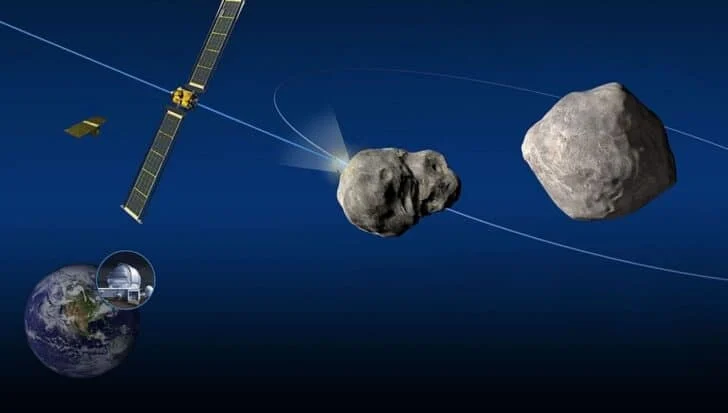
While the possibility is slim, the consequences are devastating enough that it’s well worth the effort to prevent it from happening.
In 2022, the NASA Double Asteroid Redirection Test (DART) successfully altered an asteroid’s movement by giving it a gentle nudge. If you call slamming a spacecraft into an asteroid gentle, that is.
This means that, in theory, if an asteroid is heading straight for our planet, it could alter its path so that it misses us.
The key to this working depends on whether we spot the asteroid coming on time. This is why NASA continues to work on projects to help us keep a close eye on suspicious asteroids.
Asteroids, comets, and meteoroids are all types of space rocks, but they differ in how they form and behave.
Asteroids are rocky bodies orbiting the Sun, comets are icy objects with glowing tails, and meteoroids are tiny chunks of space rock. The streak of light you see when a meteoroid passes through the atmosphere is called a meteor.
While it’s unlikely a space rock will hit us, it’s still not totally impossible. Thankfully, scientists are watching the skies closely for threats and developing strategies to prevent disaster.
So, for now, you can just sit back and enjoy the show!