Frogs are some of the most adaptable and surprising creatures on the planet, so it’s no wonder everyone loves them!
Some have sticky toe pads, some have see-through skin, and some can even survive freezing temperatures.
Whether you love nature or are just curious about what makes frogs tick, let’s hop into these facts!
Frogs drink and breathe through their skin.
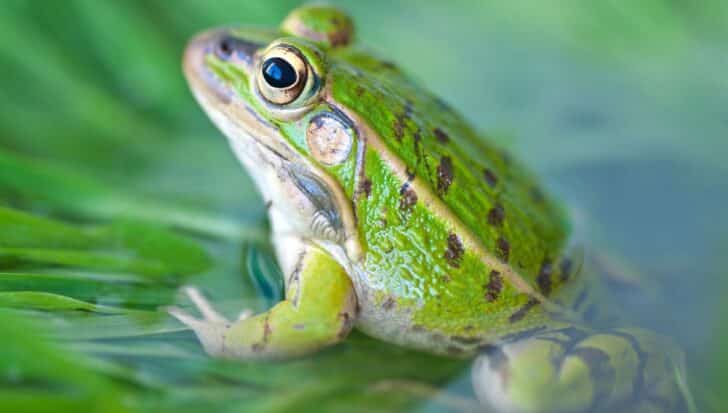
Instead of just drinking water like any silly old mammal, frogs absorb moisture directly through a “drinking patch”, a thin patch on their belly or legs.
This allows them to stay hydrated in damp environments without needing to seek out water sources.
Their skin also facilitates gas exchange, allowing them to breathe through it when underwater or in moist air, making it a dual-purpose organ.
However, this sensitivity makes frogs vulnerable to polluted environments, since chemicals can be absorbed as easily as water.
Frogs can change color to blend in or communicate.
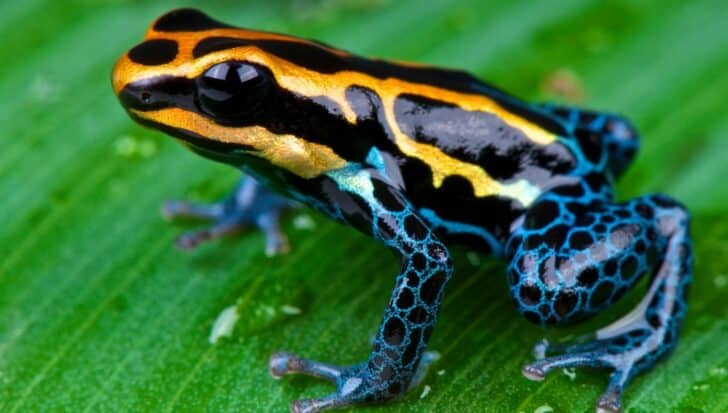
Some frogs can shift their skin color to match their surroundings, regulate body temperature, or send social signals.
This ability is controlled by chromatophores, specialized skin cells that expand or contract to display different pigments.
Environmental factors, such as humidity, light, and stress, influence these changes. A frog might turn darker to warm up in cool weather or blend into tree bark to hide from predators.
During mating season, males of some species brighten their colors to attract females as well.
Frog croaks are so loud because of a special built-in amplifier.
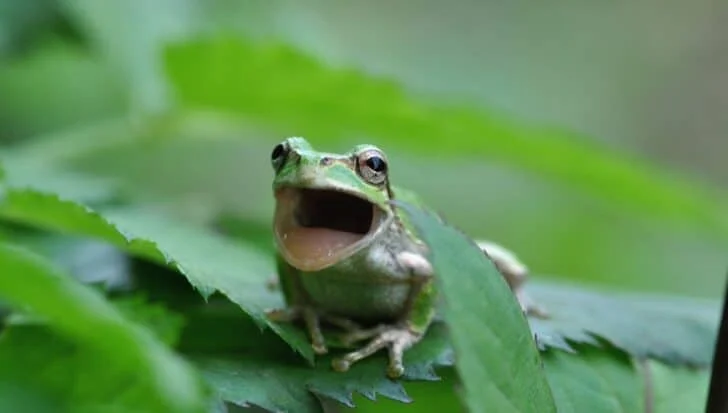
A frog’s croak is powered by vocal sacs, which are stretchy membranes that inflate and amplify sound when a frog calls.
These sacs help the sound carry farther without requiring the frog to use more energy.
Different frog species have differently shaped sacs, such as a single one under the chin or paired sacs on the sides of the head. This affects the tone and volume of each call.
Frogs use their calls to attract mates, defend territory, or signal distress, often in noisy environments. Their vocal sacs make it possible to be heard clearly, even in a crowded, croaking chorus.
Wood frogs can survive freezing cold winters.
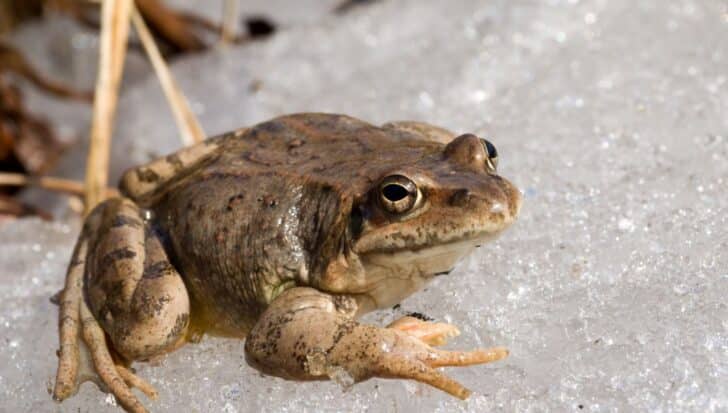
The wood frog, Lithobates sylvaticus, produces a natural antifreeze (glucose and urea) that prevents its cells from freezing and breaking.
During this frozen state, the frog’s heart stops, breathing ceases, and it enters a state of metabolic suspension.
Yet, when temperatures rise, it thaws out and resumes normal life. Scientists study freeze-tolerant frogs to explore medical possibilities, such as tissue preservation for organ transplants.
Frogs use their eyes to help them swallow food.
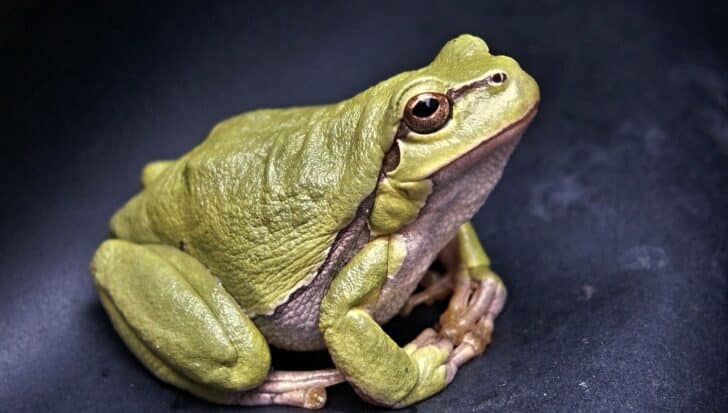
Unlike our eyes, a frog’s eyes are almost always bulged outwards, giving them near-180-degree vision, but this comes with an interesting drawback.
After flicking food into its mouth with its tongue, a frog has to blink and pull its eyes downward, pressing them against the roof of its mouth to push the food down its throat.
The eye sockets even sink slightly to protect them from struggling prey.
Speaking of frog eyes, instead of the lenses in their eyes changing to focus on different places, their lenses shift forwards or backwards like a camera.
Some frogs developed special ways to protect their young.
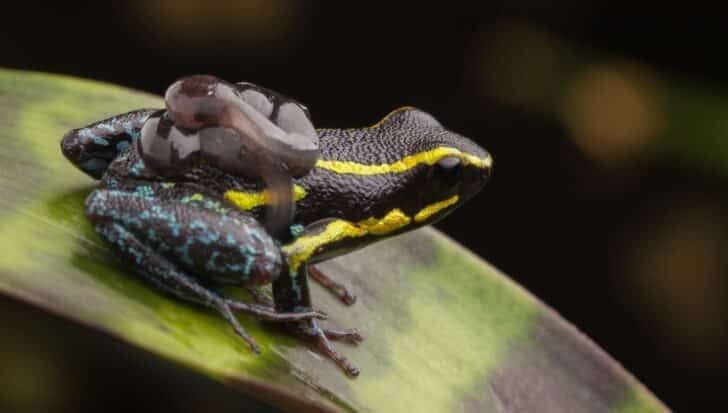
Not all frogs have the luxury to lay their eggs and walk away. Midwife toads, for instance, protect their fertilized eggs by carrying them on the male’s back or legs until they hatch.
Once conditions are ideal and the eggs are ready to hatch, they’re released into the water as tadpoles.
In rarer species, like Gastrotheca frogs, females carry eggs internally and may give birth to live tadpoles or froglets.
These strategies offer extra protection from predators, drought, or unstable habitats.
The world’s smallest frog is smaller than a US penny.
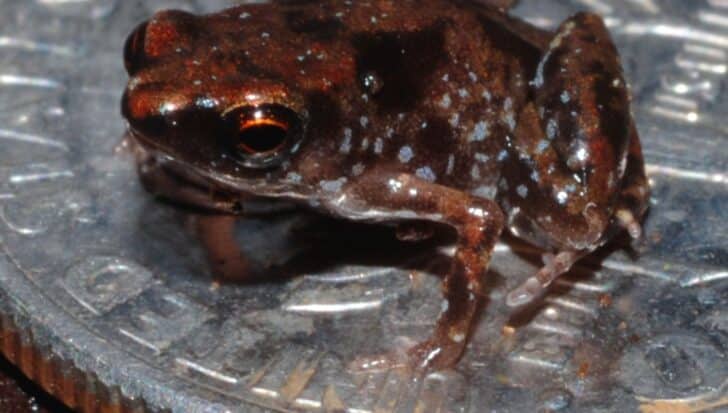
The New Guinea Amau frog, Paedophryne amauensis, was discovered in Papua New Guinea and measures just 0.3 inches (7.7 millimeters) long.
This tiny frog, about the same size as the common housefly, is a contender for the smallest known vertebrate (creature with a backbone or spine) in the world.
It lives in leaf litter, where it feeds on microscopic insects and stays hidden from predators. Despite its size, it has a full set of organs and lives a complex life just like larger frogs.
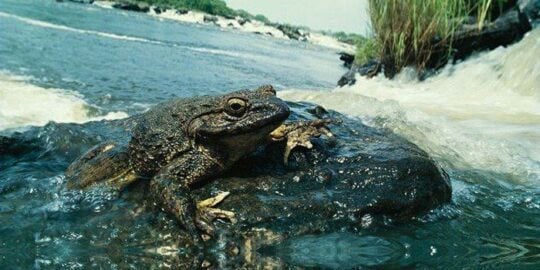
Oh, and the largest frog? That’s the goliath frog!
Frogs are pro climbers thanks to sticky pads on their toes.
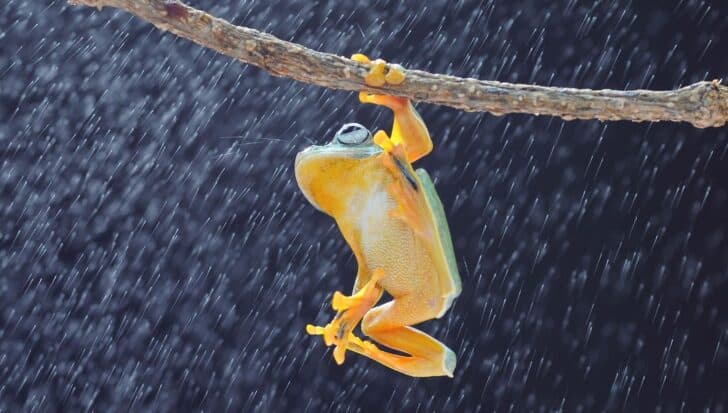
Many frogs, especially those that live in trees, have sticky toe pads that help them cling to leaves, bark, or even glass.
These pads are covered in microscopic grooves and a thin layer of mucus, which creates both grip and flexibility.
This ability helps frogs escape predators, find food, and reach high places for safety or mating.
The pads enable frogs to hold on even in wet, slippery environments, a trait that has been well-studied by scientists to create better adhesives and climbing robots.
Frogs use different calls to send different messages.
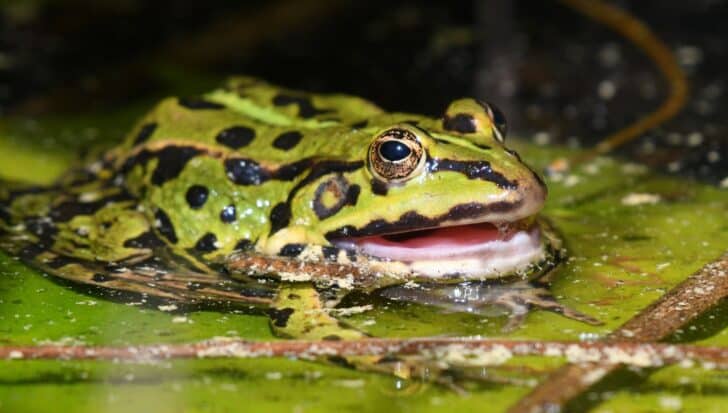
Each species has its own unique sound patterns, with some being fast and high-pitched, while others are slow and deep.
Males use advertisement calls to attract mates, which are the most common frog calls you hear, but they also make territorial calls to keep rivals away.
Some species even make distress calls when they spot predators (or get eaten by them).
Frogs can also recognize their neighbors and react differently to strangers, showing a surprising level of social awareness.
Frogs fool predators by becoming masters of disguise.
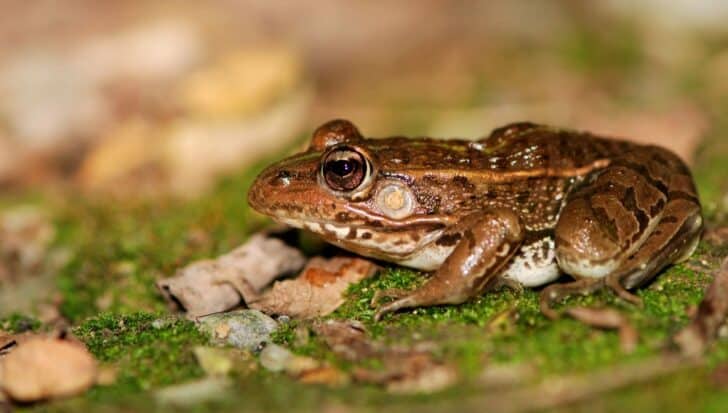
Pretty much all frogs have distinctive skin colors and patterns that mimic their surroundings, such as leaves, bark, or moss, making them nearly invisible to predators and prey.
Some others, like tree frogs, can flatten their bodies or sit still for hours to improve the effect.
More impressive are the frogs that can actively change their coloring depending on their environment, although not quite as well as chameleons.
The brown tree frog, Litoria ewingi, for example, can shift between a creamy tan color and a rich, chocolatey brown.
Poisonous frogs warn predators away with bright flashes of color.
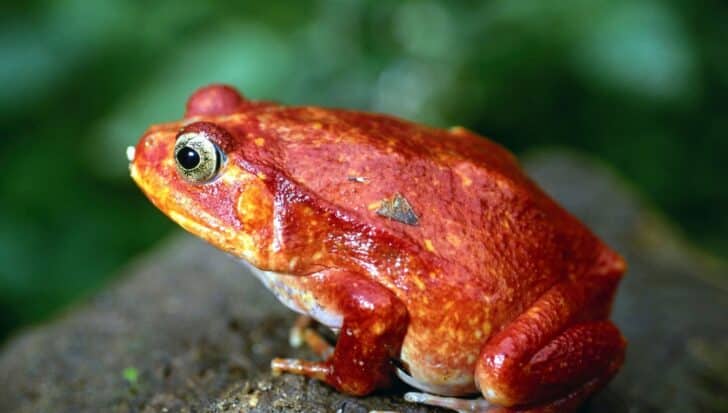
Certain frogs defend themselves with skin toxins powerful enough to kill predators. Poison dart frogs are famous for their bright warning colors, which include red, blue, and yellow.
These colors act as visual alerts, saying, “don’t eat me, or else.” Interestingly, the toxins come from their diet in the wild, with captive frogs losing their toxicity.
You’d think that these frogs wouldn’t be very good at hiding, with their bright colors, and so did we for a long time.
Researchers discovered in 2024 that some brightly colored poisonous frogs, such as the dyeing dart frog, blend in very well with their surroundings when viewed from a distance.
Most frogs can jump more than twenty times their own body length.
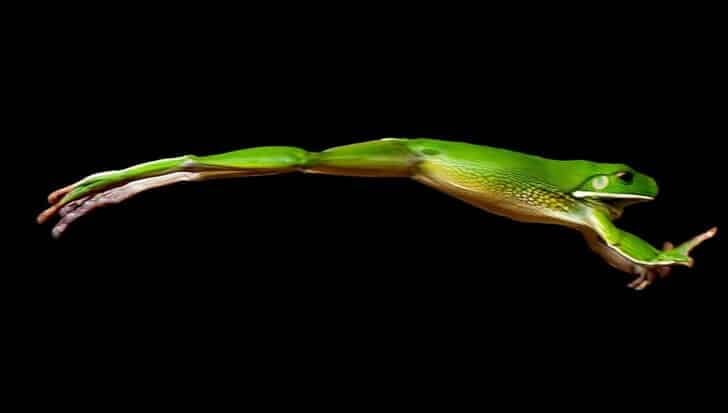
Imagine if you could jump the length of a school bus, as that’s about the equivalent length!
These incredible feats of acrobatics are made possible by their powerful leg muscles and spring-like tendons that store energy for release.
And if that’s not impressive enough for you, the striped rocket frog can jump fifty-five times its body length!
Frogs have a third eyelid that acts like goggles.
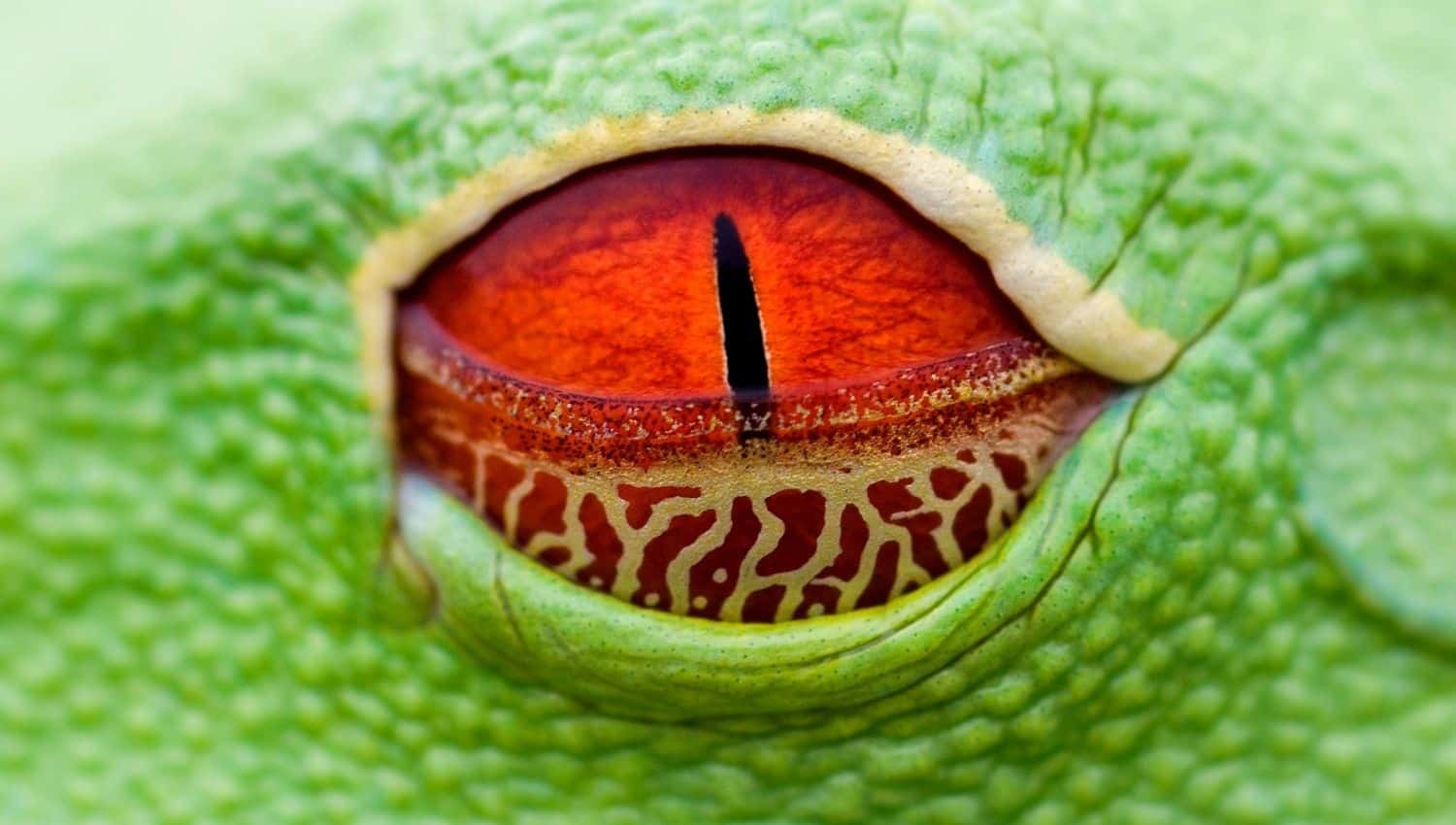
This third eyelid, or nictitating membrane, moves sideways across the eye, protecting it while still allowing the frog to see.
This comes in handy when they’re underwater or moving through rough terrain.
The membrane keeps the eyes moist and safe from debris, dust, or injury without sacrificing vision.
This extra eyelid helps frogs stay alert and unharmed in both land and water, giving them an advantage in unpredictable or cluttered environments.
Glass frogs have see-through skin.
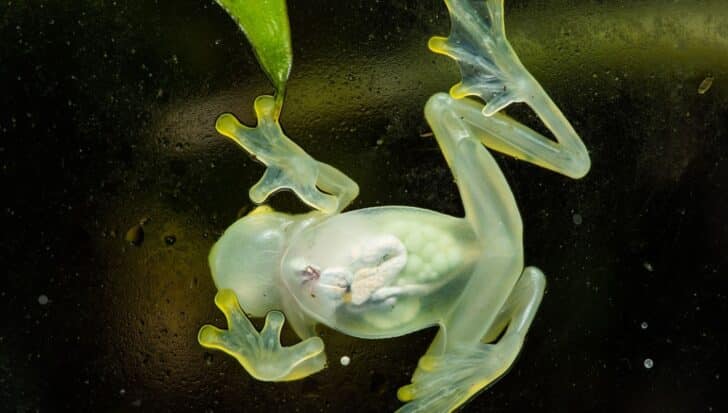
Glass frogs, found in Central and South America, have translucent skin on their underside that shows their internal organs. Through their belly, you can actually see their heart, liver, and intestines.
This incredible ability is achieved by storing all of their red blood cells in their liver during sleep. When awake, glass frogs are slightly more visible as their blood circulates more regularly.
This ability is also unique to glass frogs and is of particular interest to scientists, as their blood doesn’t clot while stored in the liver.
Frog saliva is a non-Newtonian fluid.
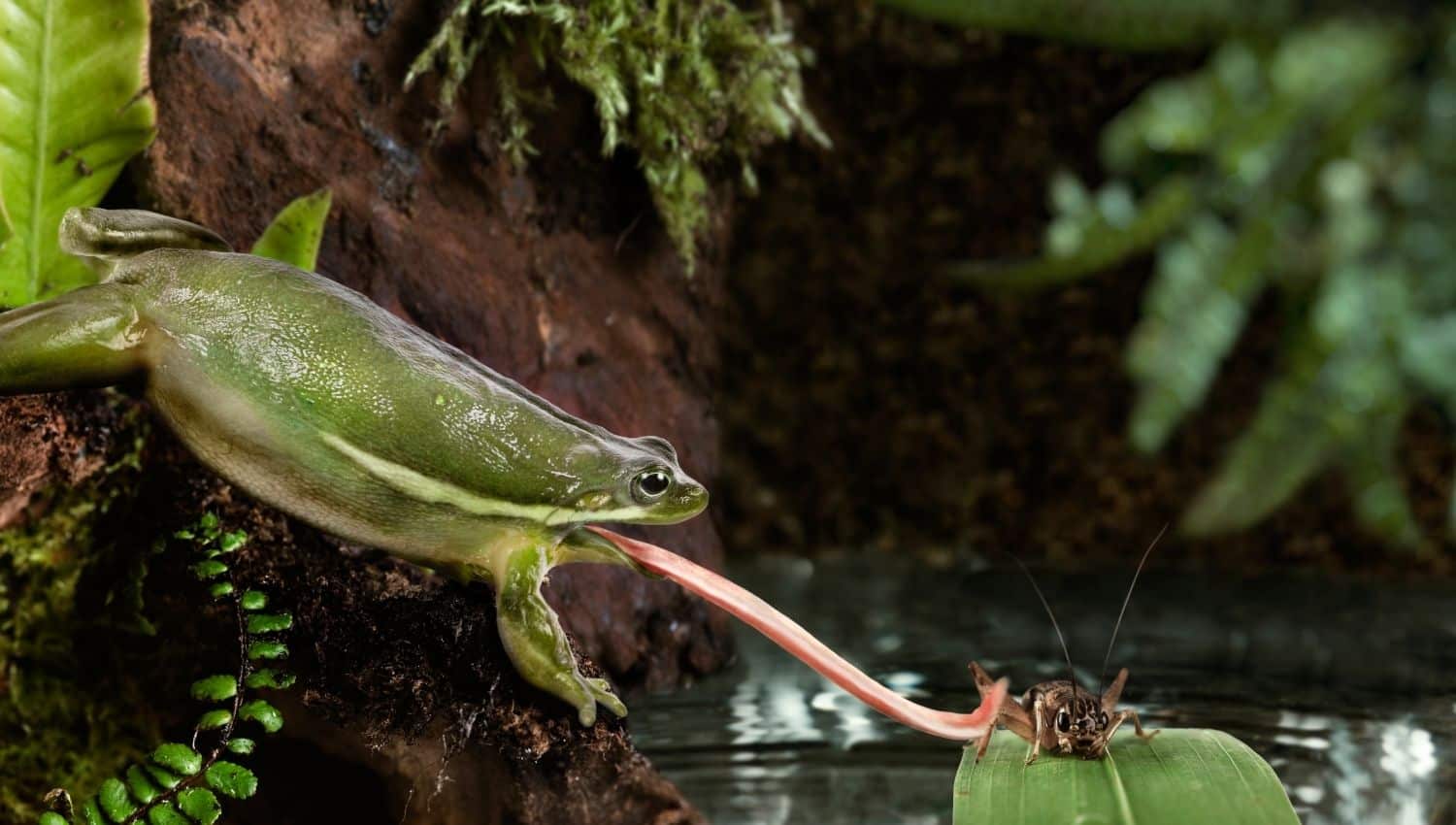
For those who dozed off in science class, a non-Newtonian fluid is a liquid that changes its flow properties depending on how it is pushed, squeezed, or struck.
A classic example is Silly Putty, which stretches when pulled slowly but snaps if you use more force. So how does this help frogs?
When frogs launch their long, saliva-covered tongues at insects, the saliva is fluid and envelops them.
As they pull their tongues back with great force, their saliva seizes up and acts like a glue, holding on tight.
When the insects reach the frogs’ mouths, their saliva is no longer under force and relaxes, allowing them to swallow it.
Fun fact: By studying this action using high-speed cameras, scientists have determined that frog saliva is fifty times stickier than one of those sticky-hand toys!
If you haven’t come away with a newfound appreciation for frogs, we don’t know how else we can help you.
They’re masters of disguise, come in all shapes, sizes, and colors, and if that’s not enough, they’re even nice enough to warn you when they’re poisonous!
Just don’t go try using a frog instead of a sticky hand, please.