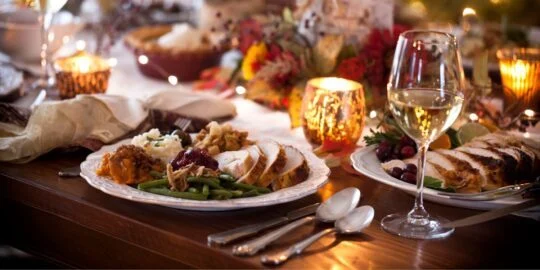
If you are looking for facts about turkeys, look no further; here are some interesting turkey facts that will have you gobbling for more!
A turkey is the relation of the grouse.
In Latin, turkeys are known as Meleagris.
The turkey is classed as poultry.
The domesticated turkey is descended from the wild turkey.
It has been a domesticated bird for over 2,000 years.
A male turkey is a stag. The female is a hen, and their chicks are known as poult.
A turkey can weigh up to 20kg.
The flesh that dangles on top of the beak is known as the snood.
The flesh that dangles underneath the beak of the turkey is known as the wattle.
Farmers will incubate the eggs for 28 days, whereupon they are hatched, sorted, and separated.
The call of a turkey is ‘gobbling.’
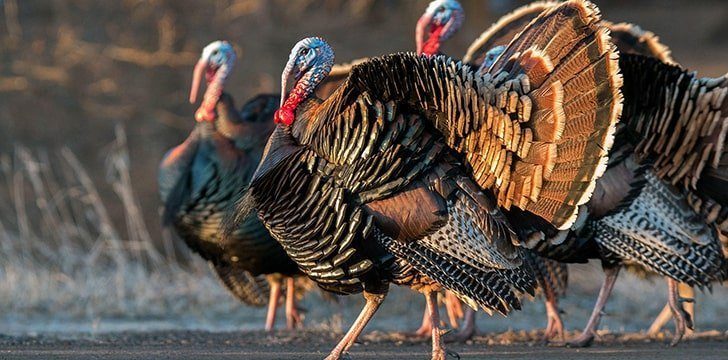
They are highly social birds, and the collective term for a group is a ‘rafter.’
The average lifespan of a turkey is ten years.
The Aztec people associated the turkey with the trickster God, Tezcatlipoca, due to its humorous behavior.
The most distinct breed in Europe is the Spanish Black.
William Strickland was the first to introduce the turkey to England – his coat of arms even had one on it.
Thomas Tusser first introduced the turkey to the Christmas fare in 1573.
The Broad Breasted White turkey is bred for its meat.
Turkey is eaten at both US and Canadian Thanksgiving. Find out why we eat turkey on Thanksgiving here!
It is now seen as a traditional part of Christmas dinner.
Before turkey, the working class ate goose at Christmas until the Victorian era.
In 2009, 7,734,000 turkeys were consumed on Christmas Day.
Four billion pounds of turkey feathers are wasted a year.
Turkey feather fibers are blended with nylon and spun, whereupon they can be used for knitting.
Turkey faeces have been used as fuel in power plants since 2007. 55 megawatts can be produced for 500,000 tons of waste.
Chowing down on a tasty turkey during a dinner feast we don’t often think about where they come from.
But, we now know turkeys have a long history as food for humans dating back 2,000 years.
So next time you’re eating turkey for dinner, take a moment to reflect on how fantastic they are.