Hidden in the depths of Central Asia lies a country little known to many, but there are many facts to help you learn about this unheard-of place.
Kyrgyzstan is one of the smaller countries in Central Asia, but it has a big and bold personality that’ll lure you in to find out more.
This mysteriously mountainous land is home to many traditions, such as the World Nomad Games, and is renowned for having some of the world’s most epic peaks.
Brush up your world knowledge skills with these 10 interesting facts about Kyrgyzstan.
The average elevation of Kyrgyzstan is 9,022 feet (2,750 meters).
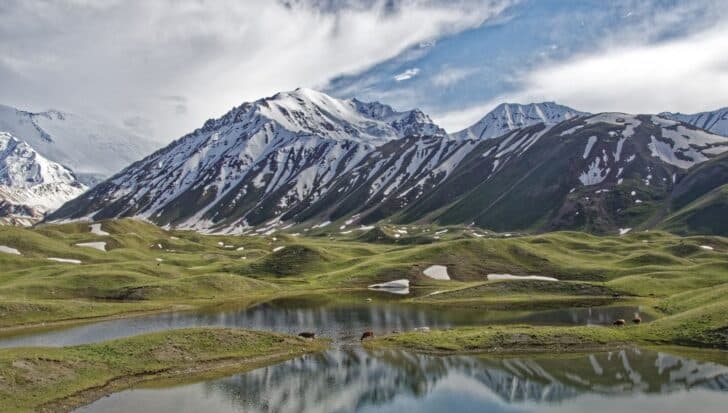
As one of the most mountainous countries in the world, Kyrgyzstan has no fear of heights.
With the majority of the country being above sea level, 94% of it is situated at an elevation of over 3,280 feet (1,000 meters).
Kyrgyzstan is home to several mountain ranges, including the Tian Shan mountain range, which extends into China.
Yurts are homes of the nomadic people.
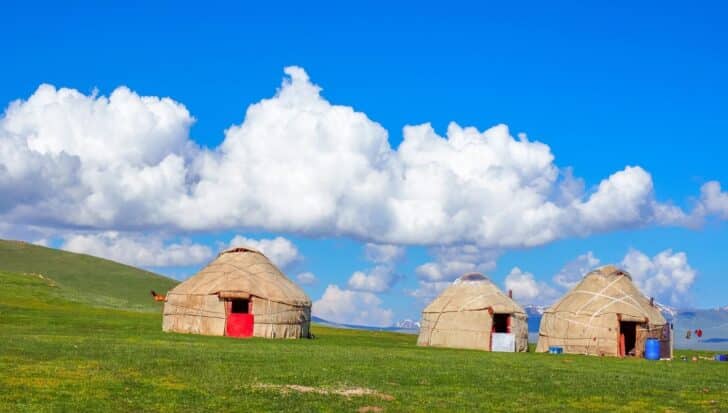
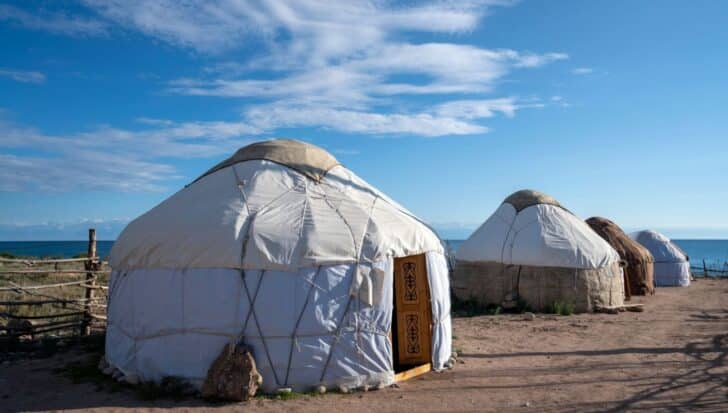
Yurts are circular tents that have been used by the Kyrgyz people for hundreds of years. Although they are often associated with Mongolia, they are used across many countries in Central Asia.
They’re made from a wooden frame, with fabric draped over to form a protective layer from snow, rain, and wind.
Felt and wool were traditionally used for the outer layer, but now many yurts have a more plastic-type canvas as it is more durable.
Traditionally, the exterior frames were crafted by the men, and the interiors by the women. The Kyrgyz people call yurts Boz Ui, which means grey hut.
Wrestling is the national sport of Kyrgyzstan.

Having a national sport is quite common for most countries, and Kyrgyzstan’s is wrestling.
Kyrgyz Kurosh is an ancient form of wrestling popular among nomadic cultures, and it is featured in the World Nomad Games.
The World Nomad Games are held every two years in various countries across Central Asia.
It is the Central Asian equivalent of the Olympics, but it involves more traditional sports such as wrestling and horseback riding.
Wrestling competitions are for men only, and participants must be over the age of 18, despite often beginning training at a very young age.
The name Kyrgyzstan is made from three words.
Kyrgyzstan’s name was formed from several words to describe the people and geography. In 1991, when the Soviet Union collapsed, the country had the chance to rename itself.
Kyrgyzstan translates to “land of the forty tribes”. In Turkic, kyrg means “40” and yz, “tribe.” The word stan is a Persian suffix meaning “country” or “land.”
Put them together, and you have Kyrgyzstan, the “land of the 40 tribes.”
Beshbarmak is the national dish of Kyrgyzstan.
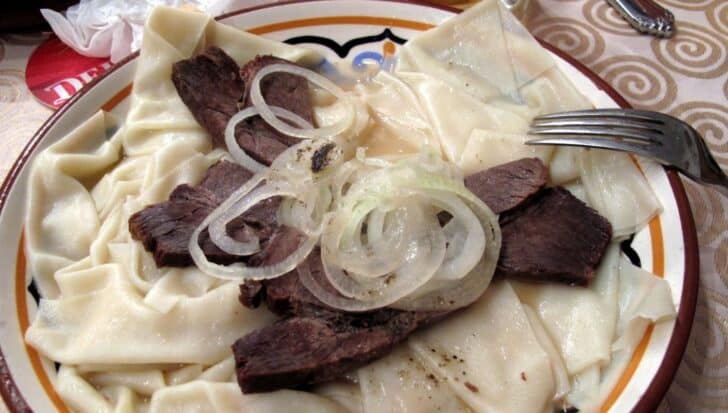
Beshbarmak embodies traditional Kyrgyz culture by featuring horse as its main ingredient.
This simple dish uses boiled meat, traditionally horse, but also mutton or beef. The meat is placed on a bed of wide homemade noodles and served with a garnish of parsley.
It might not sound like the most appetizing dish, but it is hearty and warming, which is precisely what is needed during Kyrgyzstan’s harsh winters.
Kyrgyzstan is one of 44 recognized countries in the world that are landlocked.
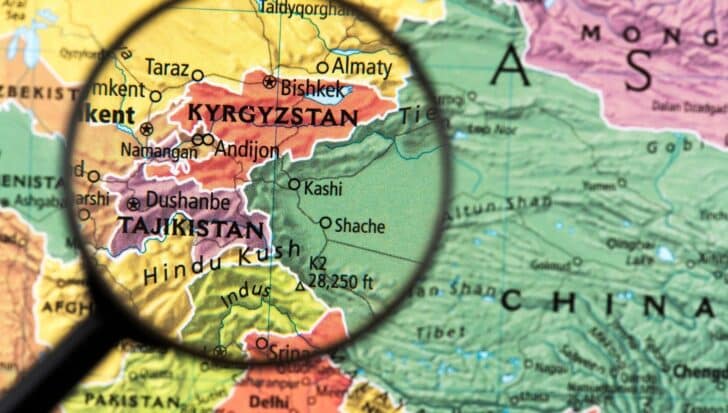
For a country to be landlocked, it means that it has no direct access to the sea and is surrounded by other countries.
There are six landlocked “stans” in Central Asia: Kyrgyzstan, Kazakhstan, Tajikistan, Turkmenistan, Uzbekistan, and Afghanistan.
Fun fact: Kazakhstan is the largest landlocked nation by area, and Ethiopia is the largest by population!
The Kyrgyz flag features a sun with 40 points, representing the 40 tribes that once inhabited Kyrgyzstan.
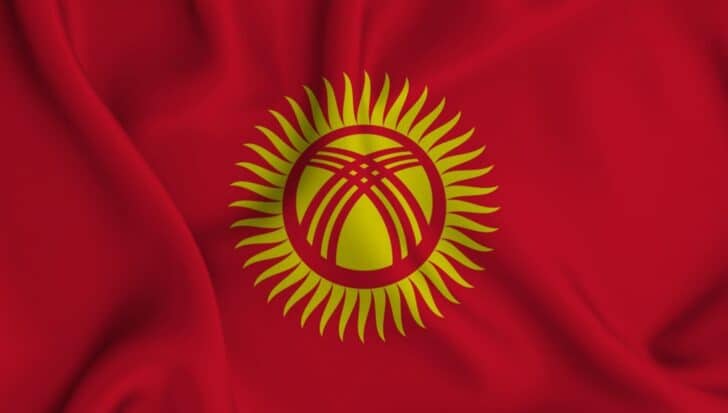
But inside the yellow sun, there are two crossed sets of three lines. These represent a tunduk, the central opening in a yurt’s roof. If you are in a yurt and look up, you will see this formation.
This subtle detail on the flag is a meaningful gesture to traditional Kyrgyz life.
Kymyz is the traditional drink of Kyrgyzstan, which is made from fermented mare’s milk.
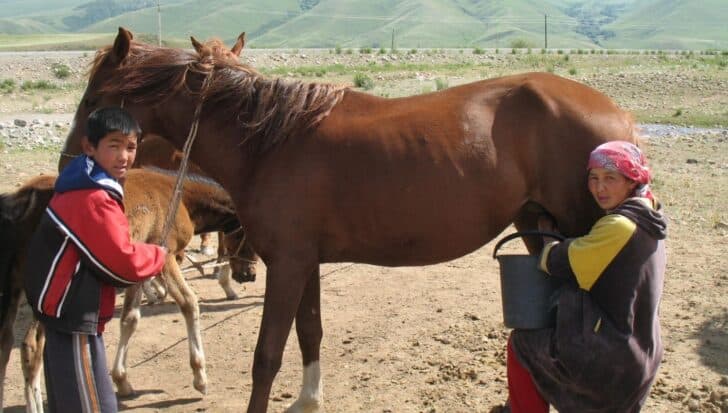
Horse milk tends to have a higher sugar content than cow’s milk, so for centuries, it has been used by nomads to create this naturally fermented beverage.
The process begins with a chemical reaction, involving the mixing of naturally occurring bacteria and yeast with the milk before storing it in a wooden container called a changan.
Once the milk has fermented, it turns sour, fizzy, and sometimes slightly alcoholic, depending on the length of time it is left to its processes.
Traditionally, it is served in wooden bowls or cups during the scorching summer months as a refreshing drink.
Kyzmyz symbolizes the deep connection between Kyrgyzstan’s nomadic peoples and horses, and it is believed to offer numerous health benefits, including boosting the immune system and improving gut health.
Kyrgyzstan has a poem longer than Homer’s Odyssey.
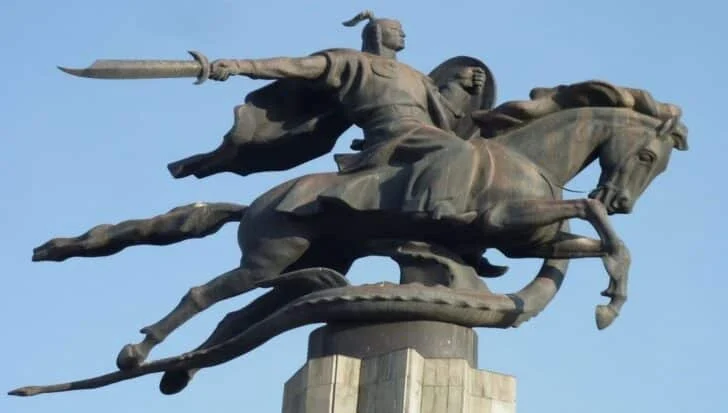
Legends in Kyrgyzstan were traditionally passed down through generations by the spoken word, and this was the case right up until the 18th or 19th centuries when The Epic of Manas was written down for the first time.
Containing legends dating back to at least the 8th century, these stories explain how the people came together to form the Kyrgyz nation. Manas was a spiritual hero of the Kyrgyz people who united the 40 tribes.
The first written documentation was transcribed from a spoken performance by Sagymbay Orozbakov and comprises 10 books.
The poem is 20 times longer than Homer’s Odyssey, and statues of Manas can be found in most cities in Kyrgyzstan, commemorating his work.
UNESCO has inscribed the poem on its Intangible Cultural Heritage List.
There are between 150 and 500 snow leopards in Kyrgyzstan.
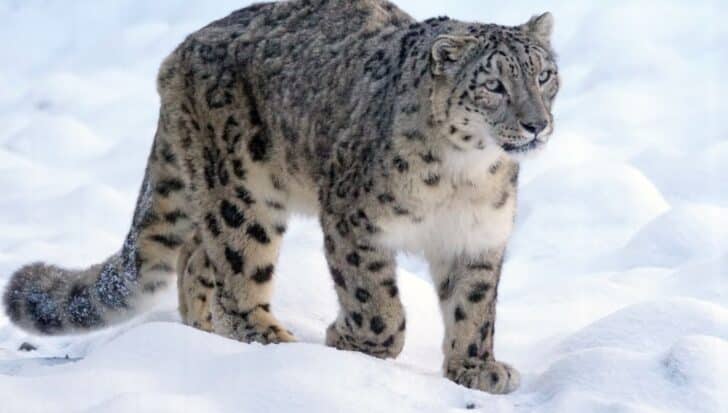
Snow leopards are listed as vulnerable, and their numbers are declining. China, India, and Mongolia have the highest estimated populations of snow leopards in the world, with a global total estimated to be between 3,000 and 5,390.
The Sarychat Ertash nature reserve in Kyrgyzstan was founded to protect the already endangered species. Snow leopards are often found in the east, in the Tian Shan mountain range.
The Tian Shan mountains connect Kyrgyzstan and China, so snow leopard numbers can vary between the two countries as they move around.
It is possible to take a tour from Karakol Valley into the Tian Shan mountains to spot the snow leopards.
Central Asia is home to a vibrant blend of traditions, stunning natural landscapes, and diverse wildlife, and Kyrgyzstan is no exception.
Kyrgyz people have a deep-rooted connection with horses, yurts, and a nomadic way of life.
From mysterious mountains to endangered snow leopards, Kyrgyzstan is home to many natural wonders.
As an up-and-coming destination for mountaineering and the great outdoors, Kyrgyzstan is a must for your bucket list!