Mushrooms are some of nature’s most incredible creations, and if you don’t know why, then boy howdy do we have some facts for you!
They’re delicious, they’re beautiful to look at, they’re really good for you, and some possess some of the strangest abilities.
If you don’t have mush-room left in your brain, you’d better make some space; these 30 mushroom facts are so magical you’ll want to absorb them all!
Mushrooms are neither plants nor animals. Instead, they belong to a separate kingdom called fungi, along with lichen, yeast, and mold.
Mushrooms absorb water like a sponge and are composed of about 90% water.
Mushrooms don’t need sunlight to grow since they can’t make their own food using the sun like plants.
The mushroom is actually the fruiting body of the fungus, which produces and holds spores. Underground, there’s usually a network of rootlike structures called the hyphae and mycelium.
If you’ve ever felt like a mushroom just appeared out of nowhere, you might be right because they grow really fast. Some might even double in size within 24 hours.
The lifespan of a mushroom varies greatly. While some may last only a week, others could even stay decades, depending on the species and environment.
Underground, however, mushrooms are technically immortal. Even after the mushroom bearing the spores withers away, the rootlike network buried beneath can continue growing, repeating the growth cycle as long as it receives nutrients.
This vast network of underground mushroom mycelia connects trees across the forest, allowing them to share nutrients. This network is sometimes called the wood wide web.
Mushrooms can also communicate with each other through their mycelia using electricity, just like how nerves send signals in our body. Scientists even believe that this mushroom language might contain up to 50 words.
Mushroom spores are incredibly resilient and can survive the most extreme conditions, including radiation and vacuum.
Humans are more closely related to mushrooms than plants. We actually share about 50% of our genetic material with mushrooms.
Mushrooms have super-strong cell walls made of the same stuff that gives insects their tough exoskeleton, chitin.
Mushrooms are such efficient growers that farmers don’t usually need a lot of space to grow them. Just one acre of land can produce a million pounds of mushrooms.
Mushroom farms in the U.S. employ over 21,000 people and contribute $3.3 billion to the economy.
China is the world’s largest producer of edible mushrooms, growing about 44 million US tons (40 million tonnes) annually. This makes up 70% of all edible mushrooms produced worldwide.
Lightning can speed up mushroom growth and potentially double production. Japanese mushroom farmers noticed this long ago and always celebrate thunderstorms.
Mushrooms obtain nutrients from the environment by digesting decaying matter. This way, they’re essentially helping to clean up waste and maintain our planet’s ecosystem.
Some mushrooms, though, don’t wait to eat only dead matter; they act. Oyster mushrooms, for example, release a mycelial toxin that paralyzes worms, which they then digest and consume.
One mushroom, the Ophiocordyceps fungus, can infect ants, turning them into zombies to help spread its spores. This real-life fungus is the inspiration behind the hit game and TV series The Last of Us.
Some wasps depend on mushrooms to help break down wood, which their larva can eat as they hatch from their eggs.
There are over 14,000 known species of mushrooms, about 3000 of which are considered edible. Only about 30 are routinely cultivated.
Roughly 90% of all mushrooms eaten in the US are white button mushrooms.
About 30 to 50 mushroom species are known to be poisonous, but only about 10 are potentially lethal.
In terms of nutritional value, mushrooms are packed with essential vitamins, minerals, and antioxidants, sometimes even more than traditional sources. For instance, you get more potassium from one cup of portabella mushrooms than from a medium-sized banana.
Mushrooms have been used as medicine in various cultures for generations. Ancient Greeks used Amadou mushrooms as an anti-inflammatory agent, while puffball mushrooms have been used to treat wounds in North America.
Scientists have been studying mushrooms for modern medicine with some success. Japan has even approved products derived from the turkey tail mushroom for the treatment of certain cancers.
Some fungi, like Aspergillus tubingensis, can break down plastic in just a few weeks. In nature, that can take hundreds of years.
About 80 mushroom species can glow in the dark. These mushrooms produce light, or bioluminescence, through a chemical reaction in their cells.
Mushroom mycelia are used to make sustainable leather and, in construction, to make sustainable bricks and insulation.
The largest organism in the world is a mushroom, the Armillaria ostoyae. This honey mushroom, found in the Malheur National Forest in Oregon, U.S.A., is estimated to be between 2,400 and over 8,000 years old and extends over 2,385 acres (965.18 hectares).
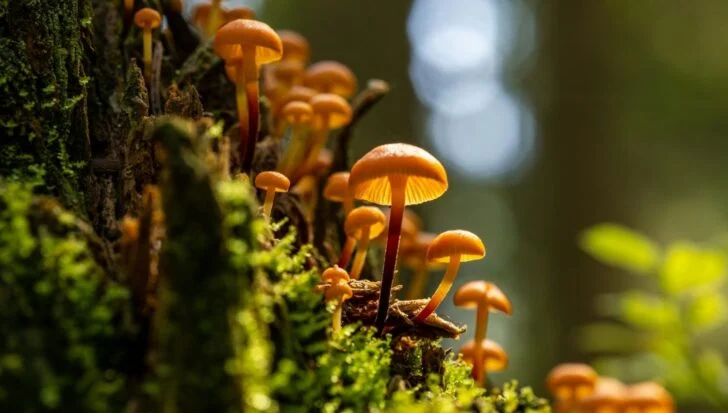
You don’t have to like eating mushrooms to admit that they’re pretty incredible.
They communicate, recycle the planet’s nutrients, glow in the dark, and even help shape future materials and medicine.
So the next time you spot a mushroom on a walk, take a closer look. It might be doing something way more interesting than you think!