The piano effortlessly stands on its own or blends into nearly any kind of music, making it a beloved instrument for people all over the world.
But beyond the music, the piano itself is a marvel of engineering. You don’t need to be a pianist to appreciate how incredible this instrument is.
While it may look simple on the outside, underneath are thousands of intricate, delicate parts working together to create beautiful music.
Whether you play the piano or just love great music, you have to keep reading. There’s a hidden side to the piano you may not know about, and these facts below might just blow your mind!
The piano was invented in the 18th Century.
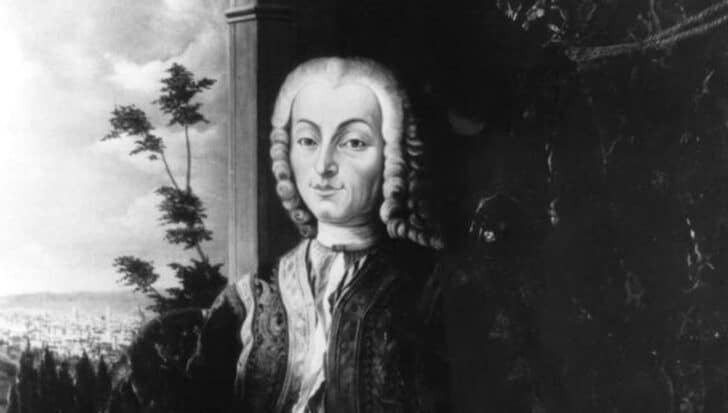
The first piano was made in 1709 by harpsichord maker Bartolomeo Cristofori. The harpsichord was also a keyboard instrument that plucked strings, rather than striking them, like the modern piano.
However, Cristofori wasn’t a fan of how little control the musician had over the sound when playing the harpsichord. Whether you pressed the key hard or softly, you got the same volume.
So, he tweaked the design and came up with gravicembalo col piano e forte, a “harpsichord that plays soft and loud.”
Over the years, Cristofori’s invention underwent several changes, becoming more affordable and producing even better sound.
The name, which was initially a mouthful, was also shortened, first to pianoforte and then simply to piano.
Three original Cristofori pianos still exist.
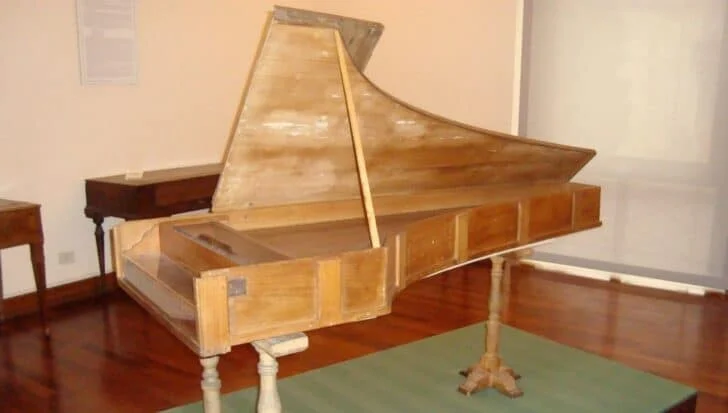
At the time of his death in 1731, Bartolomeo Cristofori, the father of pianos, had created countless pianos. However, most of them didn’t make it to this day.
The oldest surviving original Cristofori piano, built in 1720, is at the Metropolitan Museum of Art in New York.
Another, made in 1722, is housed in the Museo Nazionale degli Strumenti Musicali in Rome, Italy.
The final surviving Cristofori piano, crafted in 1726, is located at the Musikinstrumenten-Museum of Leipzig University.
Early pianos had their keys reversed.
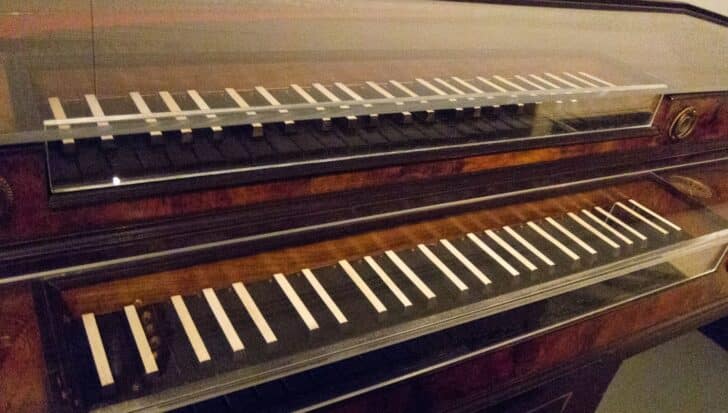
If you look at pianos from the early 18th century, you’ll notice something odd: the keys are reversed. The natural keys are black, and the sharps are white.
It was speculated that the reason for this design was practicality, as it was far easier to carve out the large natural keys from ebony than from ivory.
However, this design posed a challenge because it was difficult to tell when one natural key ended and another began.
Eventually, the colors were flipped. On modern pianos, the sharps are black, while the natural keys are white, making them easier to distinguish.
Pianos are both stringed and percussion instruments.
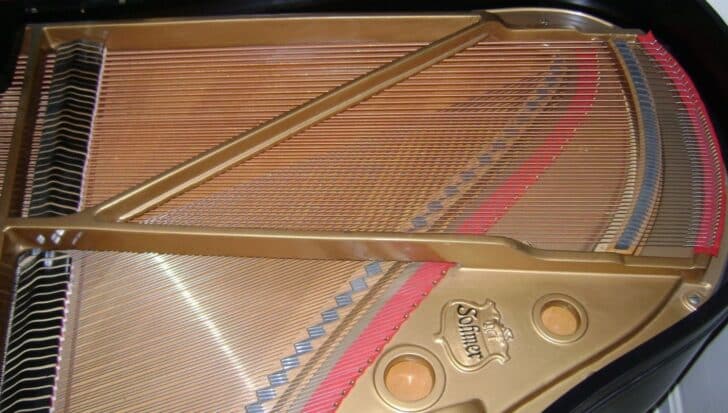
Pianos are sometimes grouped with stringed instruments like the guitar or violin because they technically have strings inside, but that’s all they have in common.
While guitars need their strings plucked, pianos operate by a different mechanism. Each time you press a key, it triggers a small hammer inside the piano to strike the string, which vibrates.
It’s this added detail that elevates it to a percussion instrument, such as a drum or cymbal.
The piano has gone to space.

No, it wasn’t a grand piano but an electric one that astronaut Ed Lu carried to space. Still, playing it was a real challenge.
In zero gravity, staying in front of the piano was tough. Lu joked that he could barely get through a few notes before floating away.
To fix that, he attached a strap to help keep him anchored to the piano while he played.
We’ll let you be the judge of how good the performance was, as videos of the performance can be found online!
Pianos have the broadest range of any musical instrument.
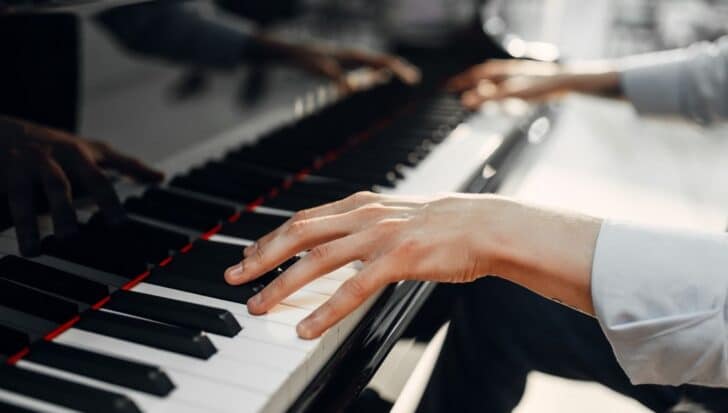
Early pianofortes from the 18th Century had about 5 octaves, which was still impressive for the time.
However, as piano makers continued to improve the design, the range expanded, first to six, and now over seven octaves in the modern piano.
Additionally, pianos have an extensive frequency range. The lowest note is 27.5 Hz, while the highest reaches 4,186 Hz.
Pianos also produce harmonic overtones that enrich each note. For example, the first overtone for the highest note can reach 8,372 Hz, 12,558 Hz for the second, and 16,744 Hz for the third.
The fourth overtone is beyond human hearing.
Some grand pianos weigh as much as cars.
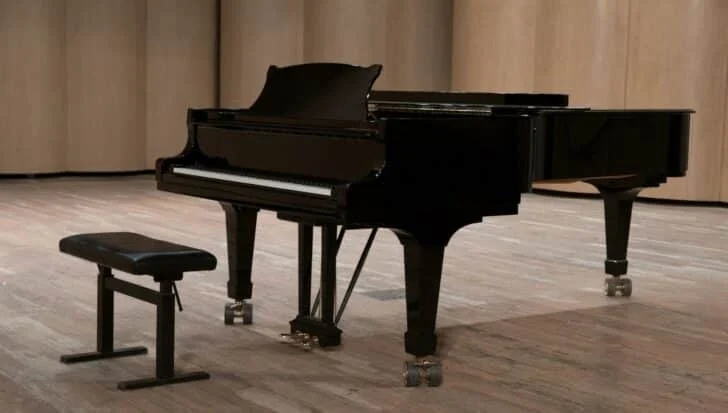
The average piano weighs between 200 and 1000 pounds (90 to 453 kilograms), which is impressive, but some weigh significantly more.
Take the Stolëmowi Klawér, for example, one of the largest pianos in the world, which weighs approximately 2.2 US tons (2 metric tons).
This absolute giant measures 19.9 feet (6.07 meters) long, 8.3 ft (2.52 m) wide, and 6.1 ft (1.87 m) high.
It was built by Polish businessman Daniel Czapiewski, who owns a factory that makes wooden houses.
However, he is also known for taking on unusual challenges, such as the time he built an upside-down house.
Czapiewski’s giant piano made its debut at a concert in Szymbark, Poland, where famous Polish concert pianist Leszek Mozdzer played it.
The iconic piano from Casablanca sold for $3.4 million.

This piano, featured in the iconic As Time Goes By scene in the 1942 film Casablanca, was crucial to the plot but was never actually played on-screen.
Oh yes, it definitely appeared in the movie, but the songs you hear are all pre-recorded. Dooley Wilson, who played Sam, couldn’t play piano at all, so he just pretended to tap away at the keys!
The piano itself was finally sold off to an anonymous buyer in 2014.
Not to start any beef among the musical instruments, but if there were ever a vote to crown one king, the piano would win hands down.
From its range to rich sound quality, it’s definitely earned its position at the top. Add to that over 300 years of history, and the piano, like fine wine, has only gotten better with time.
And with these facts, you know exactly how and why it’s such an extraordinary instrument.