If there’s one food that deserves to be called universal, it’s rice. It’s cheap, available almost everywhere, and can be used in countless ways.
From biryani to jollof to risotto, many cultures have iconic rice dishes that are part of their identity. And that speaks volumes about how this humble grain has nourished us for millennia.
However, for a food that the world consumes so much of, how much do you really know about rice?
If you’ve ever wondered what makes rice so special, we’ve served up a steaming bowl of rice facts that’s just waiting to be dived into!
We’ve been growing rice for over 9,000 years.
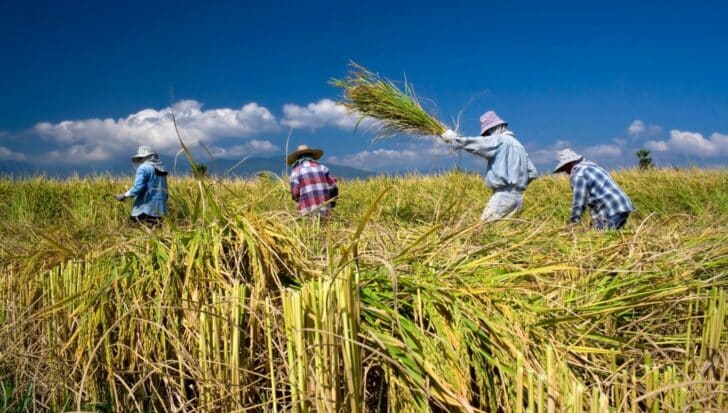
In China, archaeologists uncovered evidence of rice cultivation dating back roughly 13,500 to 8,200 years ago.
Through these records, we also know that the first to grow rice were early Neolithic tribes in the Upper and Lower Yangtze Rivers.
From there, these varieties of Asian rice (Oryza sativa) spread to neighboring regions, including Tibet, Korea, Japan, and Taiwan. But its journey didn’t end there.
Rice eventually made its way around the world, reaching the Americas through trade and migration in 1492.
Interestingly, not all rice came from Asia. The African variety (Oryza glaberrima) was domesticated from a different local wild species around 3,000 years ago.
Growing rice requires a lot of water.
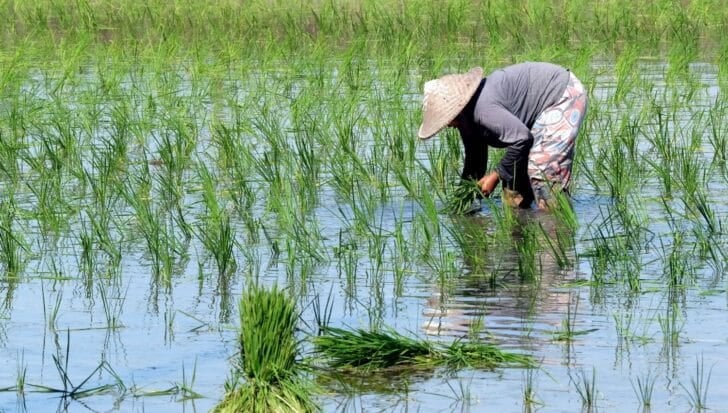
On average, farmers use about 790 to 1,320 gallons (3,000 to 5,000 liters) of water to produce just 2.2 pounds (1 kilogram) of rice. Compared to other crops, that’s a lot!
For instance, the same weight of wheat requires approximately 240 gallons (900 L) of water, whereas potatoes require only about 130 gallons (500 L).
This might give the impression that rice is a particularly thirsty plant, but funnily enough, it doesn’t actually require that much water to grow.
Then, why do farmers flood rice with water?
See, rice is a semi-aquatic plant. That means it can tolerate being underwater for extended periods, but weeds can’t.
So, the main reason rice is grown in flooded paddies isn’t to hydrate the plant but rather as a natural method of controlling weeds and pests.
Rice was used as a form of currency in Ancient Japan.
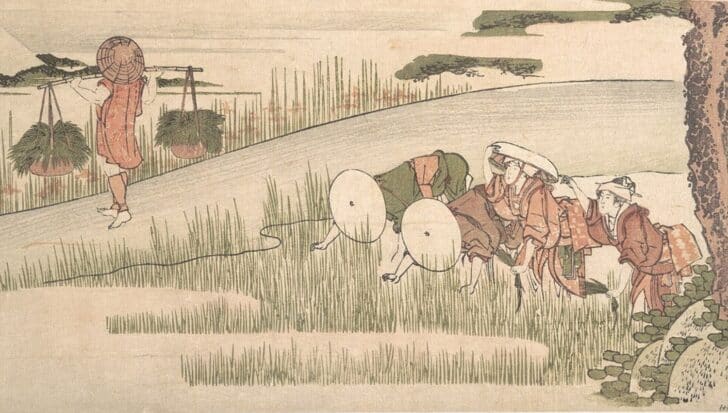
Rice was more than just a food source in Feudal Japan; it was a crucial part of the economy. At the time, it was measured in koku.
One koku represents the amount of rice required to feed one person for a year and is equivalent to 47.5 gallons (180 liters) by volume.
Japanese nobility even measured their wealth based on how many koku of rice they produced from their fields. Rice was also used as a form of currency to pay taxes and salaries.
Even after Japan introduced a monetary system, rice remained an essential economic symbol.
There are over 120,000 types of rice.
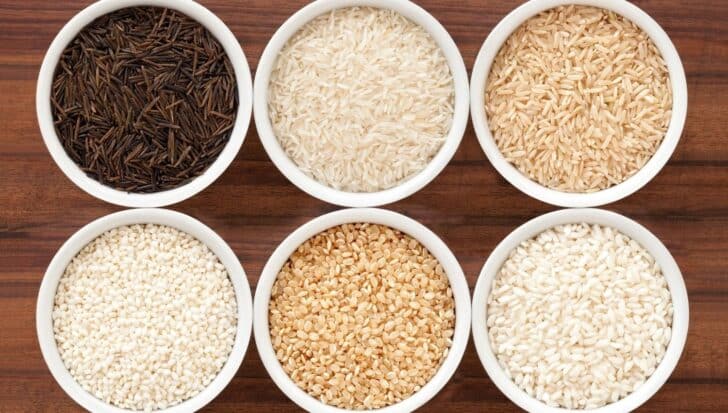
When it comes to rice, you’ve definitely got options! Rice types are typically grouped based on grain size, degree of processing, starch content, and flavor profile.
Grain size is easily determined, as it can be classified as long, medium, or short-grain.
Processing is fairly straightforward, too: unprocessed rice is sold as rough or paddy rice, rice with the hull removed is brown, whole grain rice, and when all the outer layers are stripped away, you’re left with white rice.
Now, if you’re wondering what sticky rice is, well, that’s where the starch content comes into play.
Other varieties of rice you can find on store shelves include parboiled rice, instant rice, jasmine, basmati, and sweet rice.
Wild rice isn’t rice.
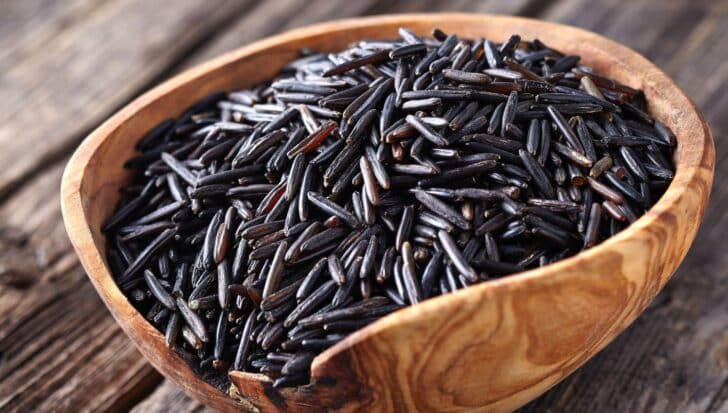
This is one of those cases where names can be misleading.
Cultivated rice belongs to the species Oryza sativa, while wild rice comes from an entirely different genus, Zizania.
Originally, wild rice was only obtained from the wild, and the process was tedious. While that’s still done by some, what you’ll find in a supermarket is grown at commercial levels in paddies.
Uncooked rice may last 30 years.
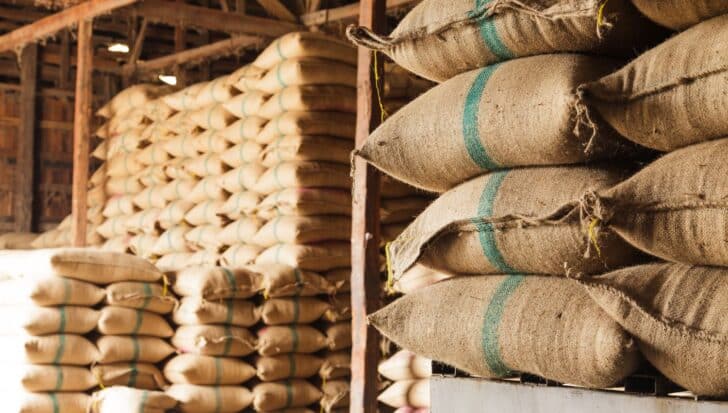
It’s typically recommended to use up white rice within two years, but it can last much longer if stored properly.
It’s best to keep rice dry and cool, ideally at a temperature of 40 degrees Fahrenheit (4 degrees Celsius) or below.
However, even at temperatures of around 70°F (21°C), combined with oxygen absorbers, rice may remain in excellent condition for up to a decade.
Rice fields are used for art.
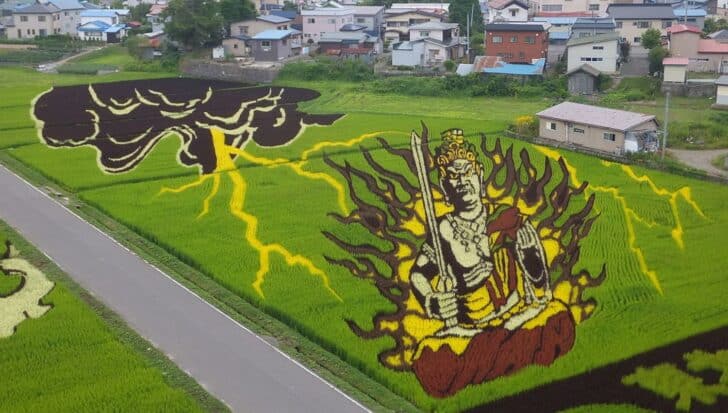
This is a type of agricultural art known as rice paddy art or tambo art. It involves cultivating rice plants of various colors in a way that creates large-scale images visible from a height.
The practice began in 1993 in the Japanese village of Inakadate. The townspeople created the first picture with just four types of rice and built a viewing tower nearby.
This simple community project grew to be even larger than they imagined. It now attracts tourists from all over the world and has been adopted by nearby towns as well.
Sticky rice was used to build the Great Wall of China.
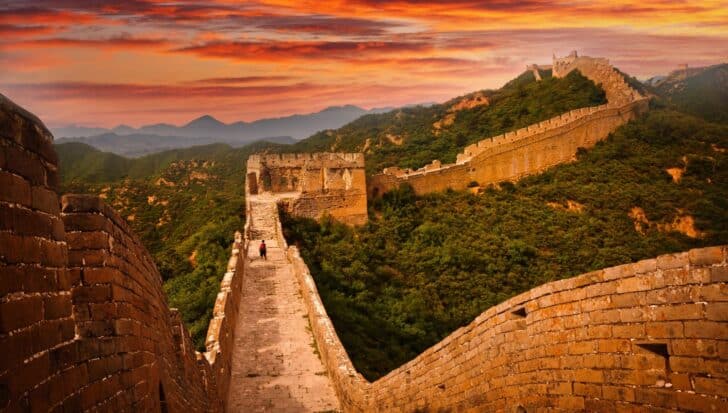
During the Ming dynasty, when large sections of the Great Wall of China were constructed, builders had to use whatever resources were available, including rice.
They combined sticky ice and slaked lime to create a special kind of mortar. The sticky rice served as a binding agent, making the mortar water-resistant.
This special mortar was far more durable and stronger than regular mortar and is perhaps why the wall has lasted so long.
Rice has been grown in space.

In 2022, astronauts planted rice seeds at China’s Tiangong space station. Surprisingly, the rice seeds not only germinated but also matured and produced new seeds.
These incredible space rice seeds were then brought back to China and planted again. And once again, they grew and produced another round of seeds.
This groundbreaking discovery has shown scientists how plants adapt to the challenges of space.
Rice-based skincare is a billion-dollar industry.

Rice isn’t just feeding the world; it’s a secret weapon in the skincare industry as well. In 2023 alone, the market for skincare products containing rice was valued at a staggering $6.4 billion.
However, the use of rice in skin care is far from a new trend. Over a thousand years ago, ancient Japanese women used rice water to care for their skin and hair.
Now, modern science is revisiting this ancient Asian beauty ritual due to its anti-aging, hydrating, and brightening benefits.
Rice-based creams, moisturizers, toners, and face masks are gaining popularity in the skincare market.
Two major global car brands are named after rice.

Honda Motor Company is named after the founder’s family name. Interestingly, the word Honda in Japanese directly translates to “main rice field.”
Similarly, Toyota was named after the founder, Kiichiro Toyoda, whose last name translates to “beautiful rice field.”
Toyoda was adjusted to Toyota because it required only eight brush strokes (a lucky number) to write in Japanese katakana.
Rice has had quite a journey, serving as art, currency, construction material, and even traveling through space.
But above everything else, rice is a staple carbohydrate that fuels over half of the world’s population.
And because it’s part of so many cultures, rice holds deep meaning in our diets, traditions, and identity.