The term “snow moon” may be unfamiliar, but it has been used for hundreds of years alongside other moon names.
The name suggests it might be a moon of the winter months, but which one and why is the term used?
Where did the term come from, and why is it called a Snow Moon?
What is a snow moon?

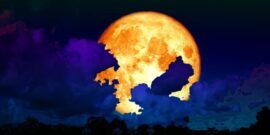
The term “snow moon” is the name of the full moon in the month of February.
It is the second full moon of the year following the “wolf moon,” which we see in January.
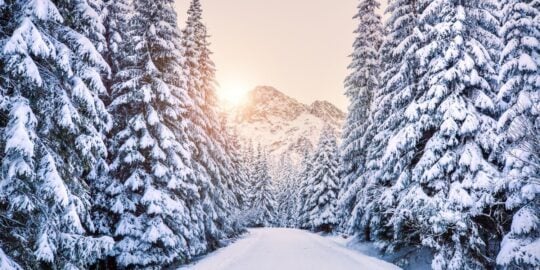
Although both January and March can experience snow, February is known as the month with the heaviest snowfall in the Northern Hemisphere.
Why call it a snow moon?

Moon names come from the lunar calendar, which is an ancient way of defining seasons.
The moon names in the lunar calendar are based on seasonal elements, so they will have different names depending on where you are in the world.
Across the northern hemisphere, the moons share similar names due to similarities in climate.
The moon names were originally the ancient month names, and it is suggested that Colonial Americans incorporated them into the modern-day calendar.
February’s full moon is called a snow moon because it is common to experience snow this time of year in the northern hemisphere during the month of February.
For example, January’s moon, the “wolf moon,” is named so, as it’s the wolves’ mating season.
Are there other names for a snow moon?

The term snow moon is used in both Northern America and Europe to describe the full moon in February.
However, the Moon has multiple names, but they all share similarities.
Native North Americans sometimes referred to the moon as the “hunger moon” and “bone moon” due to the lack of food sources at that time of year.
Other variations include the “storm moon,” perhaps in relation to the harsh weather conditions found in some climates at this time of year.
Is there always a snow moon?
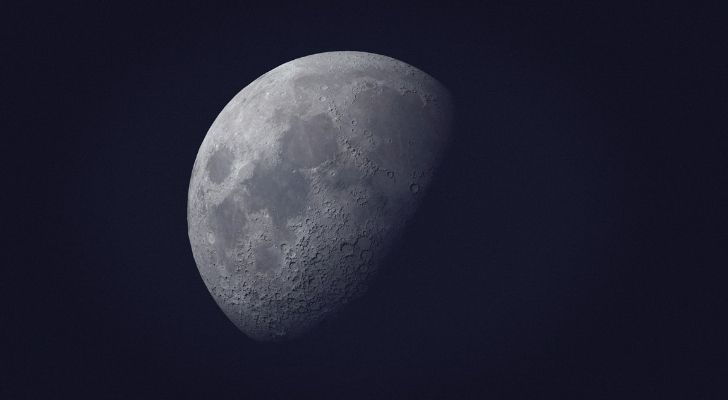
As we know, February is the shortest month and, as a result, doesn’t always have a full moon.
A full moon occurs every 29.5 days, which is known as the lunar calendar.
So as the years go on, it is possible for February to miss a full moon.
This is known as a “black moon” instead of a snow moon, and one occurs around every 19 years, the last of which occurred in 2018.
A snow moon can only occur in February, and if there isn’t one, then the moon in February is known as a black moon.
When this occurs, both January and March have two moons, and the term snow moon isn’t used.
A snow moon is a full moon that occurs in February, and when it doesn’t occur, February’s moon is known as a black moon.
The moon is called a snow moon, as in the northern hemisphere, February is a harsh winter month that often experiences snow.
The name comes from ancient month names, which our ancestors used to help keep track of the changing seasons.