Starfish might seem like a pretty shape lying on the ocean floor, but there’s so much more going on beneath the surface.
With eyes on their arms, feet that can taste, and the weirdest way of reaching for a snack that’s juust out of reach, starfish are truly bizarre.
They’re obviously not stars, but are they fish? You’ll have to read on to find out!
Starfish don’t have any brains.
Instead, starfish have a decentralized nervous system, with nerves extending into each arm. This arrangement allows each arm to operate independently while coordinating with the others.
You won’t find a starfish pondering its next move the way mammals might, but its nervous system is perfectly adapted for responding swiftly to environmental stimuli.
The absence of a brain doesn’t mean starfish are simple or slow to react.
Their sensory system, which detects touch, light, and chemicals, is finely tuned, allowing them to find food, avoid predators, and move about their underwater world.
Starfish have saltwater blood.
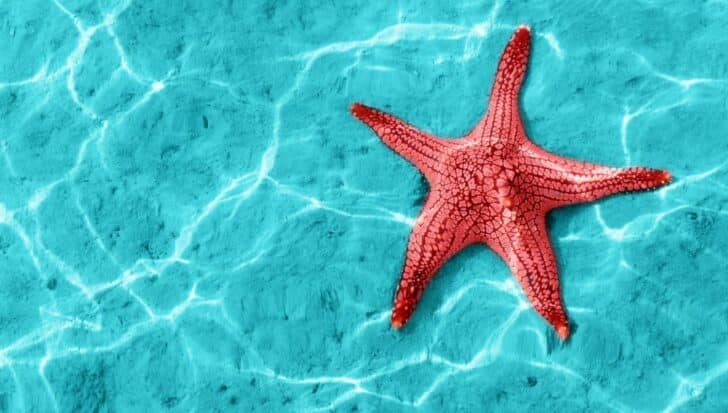
Instead of boring old-fashioned blood, starfish circulate nutrient-rich seawater throughout their bodies!
If you look at the top side of a starfish, just on the side of its center part, you’ll see a small hole. That’s where the water goes in!
This hole is called the madreporite, and it’s a key part of their water vascular system, which helps them move, feed, and even breathe.
Most Starfish can regrow their limbs.
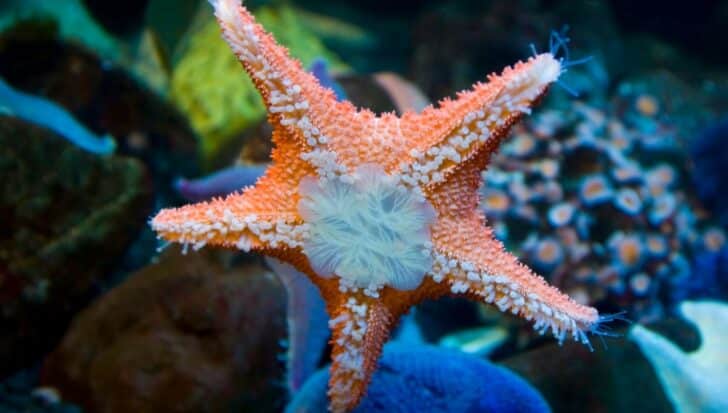
The regenerative abilities of starfish are so impressive that they’re considered a model organism for the study of regrowth and its evolution!
Limb regrowth is pretty handy for Starfish, considering predators often like to make a snack out of their arms.
They can detach their arms at will, too, making a quick getaway while their foe feasts on their lost limb.
Starfish are not fish!
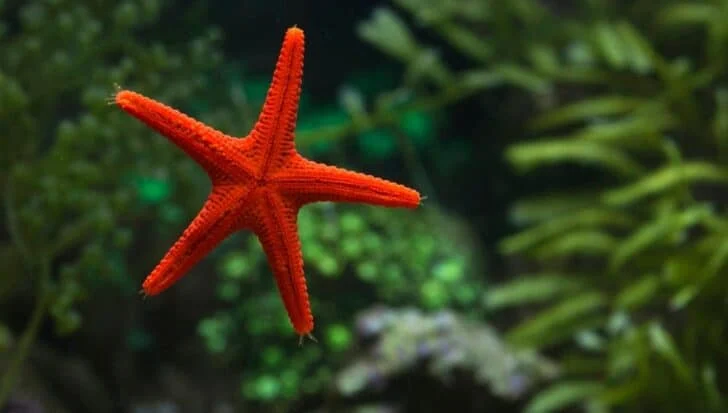
Starfish belong to the class Asteroidea, within the phylum Echinodermata, along with other weird sea creatures like sea urchins and sand dollars.
Unlike actual fish, starfish do not possess gills, scales, or fins. So why are they called starfish?
This maritime mix-up likely began with early explorers and naturalists who, seeing star-shaped creatures in the sea, cried out, “Ooh, Bob, come have a look at these starry fish things over here!”
Some other starfish reproduce by detaching their arms!
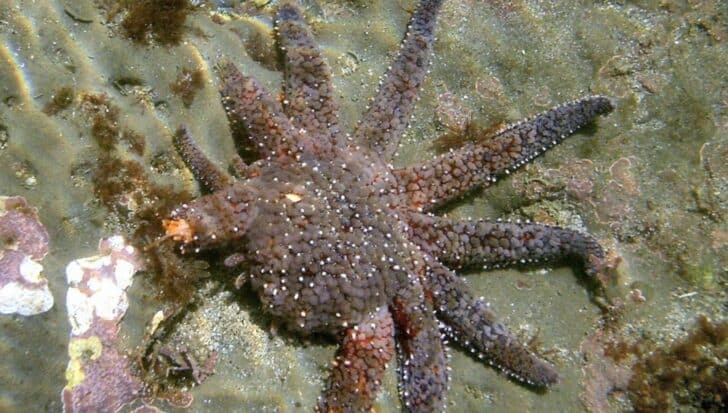
As they belong to the Asteroidea class, they’re sometimes called “asteroids.” When a starfish like Linckia multifora loses an arm, the detached limb can move and live independently.
The limbs of these special starfish are called “comets,” which grow into a whole new starfish in as little as ten months.
They can digest food externally!
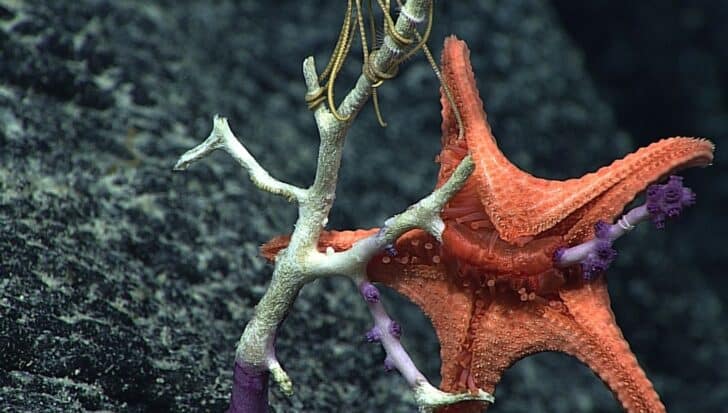
This process, which involves pushing their stomachs out of their bodies, is particularly handy when trying to crack open shellfish like mussels or clams.
It’s also straight out of a horror film.
They use their tube feet to latch onto prey, slowly prying the shells apart just enough to slip their stomach inside.
Digestive enzymes then liquefy the soft tissue of their meal externally, turning it into a nutrient-rich soup that the starfish draws back into its body.
Nature is metal!
Starfish have eyes on the tips of their arms.
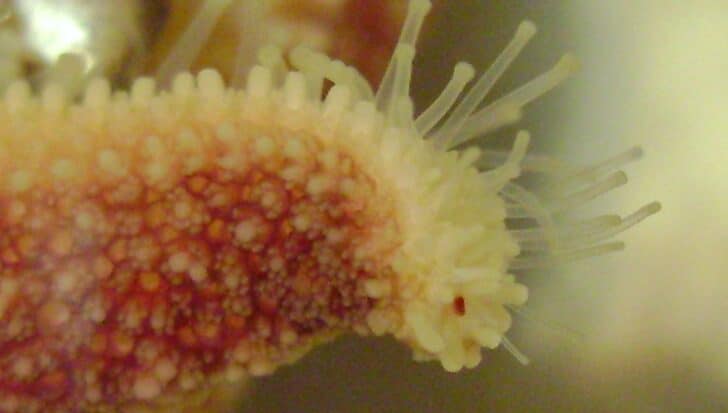
On the tip of each starfish arm is a very simple form of eye called an eyespot, much like the eyes of insects and other invertebrates.
Their eyes are called simple as they only have one lens, and are only really good for detecting light levels and very stationary objects like rocks and coral.
Some deep-sea starfish glow in the dark.
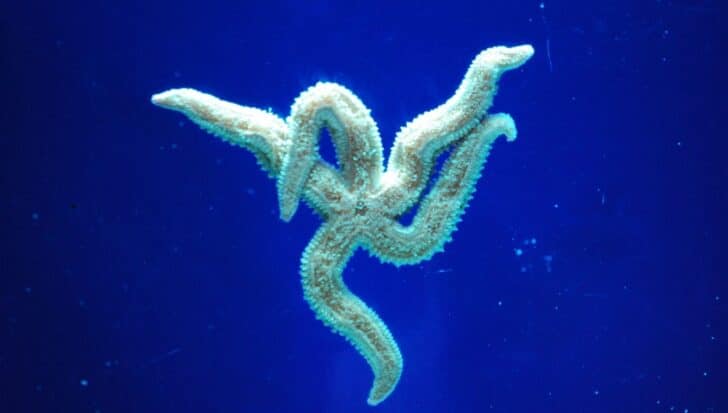
Once you get to depths below 1,000 feet (304.8 meters) underwater, very little light can be found.
It’s the very reason that some deep-sea creatures like angler fish and vampire squid produce their own light.
It turns out that deep-sea starfish are no different, either. Some species, such as N. Americana, shed light from their whole body!
These starfish also have much more developed eyes than their shallow water counterparts, evolving to see other glowing starfish, glowing predators, and prey. Spooky!
Starfish walk around on their taste buds!
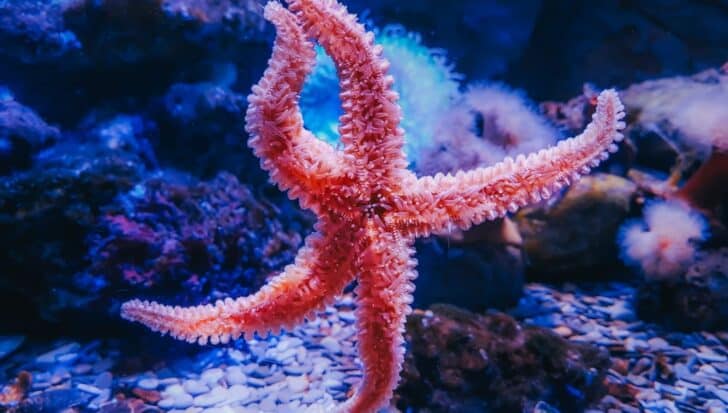
Starfish move and feed using a remarkable hydraulic mechanism called the water vascular system.
This network of fluid-filled canals operates using seawater to power their tube feet (the many long, thin, suction cups that line the undersides of their arms).
These little feet are used to do much more than walk around, though; starfish use their feet to smell and taste, and some species can extend these little feet to catch food that floats on by.
Most starfish don’t have another way of excreting waste, so the tips of some of their feet are nipped off, and the waste comes out of the hole created.
Yup, they pee out of their taste bud feet!
There’s a reason they’re symmetrically star-shaped.

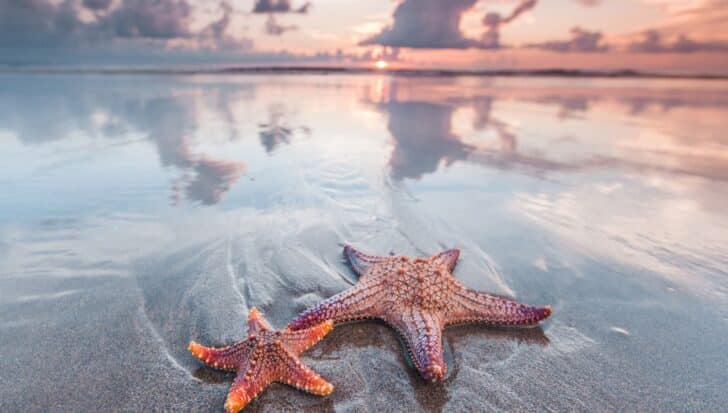
Starfish bodies revolve around a design known as radial symmetry, meaning their arms extend outward from a central point like spokes on a wheel.
Most starfish have five arms, but some species boast far more.
Not just for looks, this symmetry enhances their ability to sense and interact with the environment from all directions. The more arms they have, the better their senses.
Starfish have adapted perfectly to their environments.
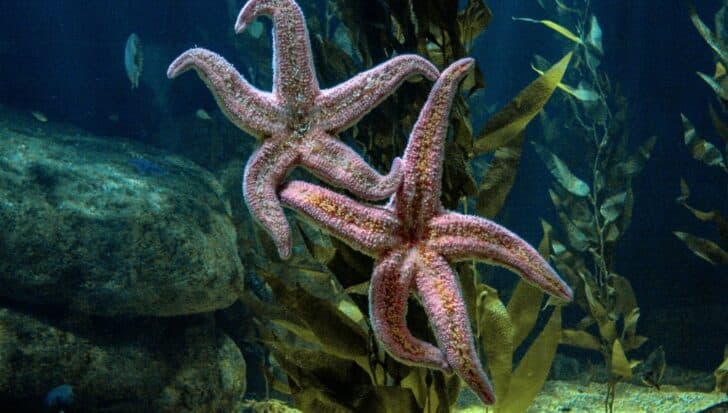
Starfish dazzle with diverse colors ranging from fiery reds and oranges to subdued browns and grays.
Their shapes also vary greatly, too, with some starfish sporting slender, stubby, or dramatically curved arms.
All of this helps them avoid predators by camouflaging in with their surroundings. Some colors, such as purple, can even act as warning signals of toxicity.
The differences in arm shapes also reflect adaptations to varying habitats, feeding strategies, or reproductive needs!
Their tough, spiny skin protects them from larger predators.
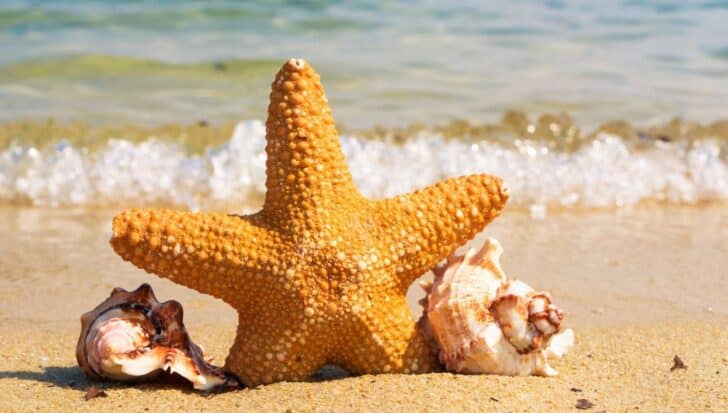
Their skin is made up of calcified plates, and is often studded with small spines or bumps.
This armor-like skin protects them from predators such as fish, crabs, and sea otters while maintaining flexibility for movement.
Besides defense, these spines and surface textures reduce damage from abrasive environments. The spines sometimes contain toxins, adding a chemical layer of defense.
Starfish play a vital role in marine ecosystems.
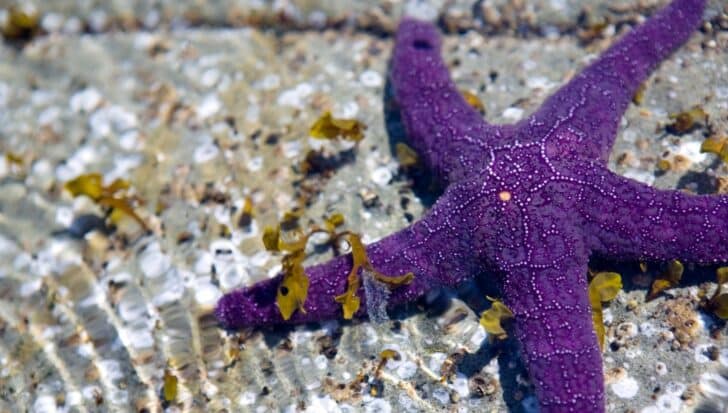
By preying on mollusks, they help regulate populations of species like mussels, preventing overgrowth that could choke out coral reefs or alter habitat structures.
Their role as keystone predators means their presence or absence can significantly influence all the tropical fish, coral, and other organisms in their underwater community.
Their movements also help aerate the sea floor, promoting healthy conditions for other marine life.
The deeper you dive into the world of starfish, the more you realize just how clever and unusual they really are.
Everything about them, down to their very shapes and colors, is perfectly suited to life underwater.
They might not look or act like most animals we know, but that’s exactly what makes them so fascinating.
Starfish truly are one of the ocean’s most incredible success stories!